What is seborrheic keratosis?
Seborrheic keratosis is a very common, non-cancerous skin growth. It often appears as a raised, waxy or wart-like spot that can range in color from light tan to dark brown or nearly black. These growths may look alarming but are typically harmless.
They tend to develop on the face, chest, back, or shoulders and are more frequent as people get older. Many individuals have multiple seborrheic keratoses.
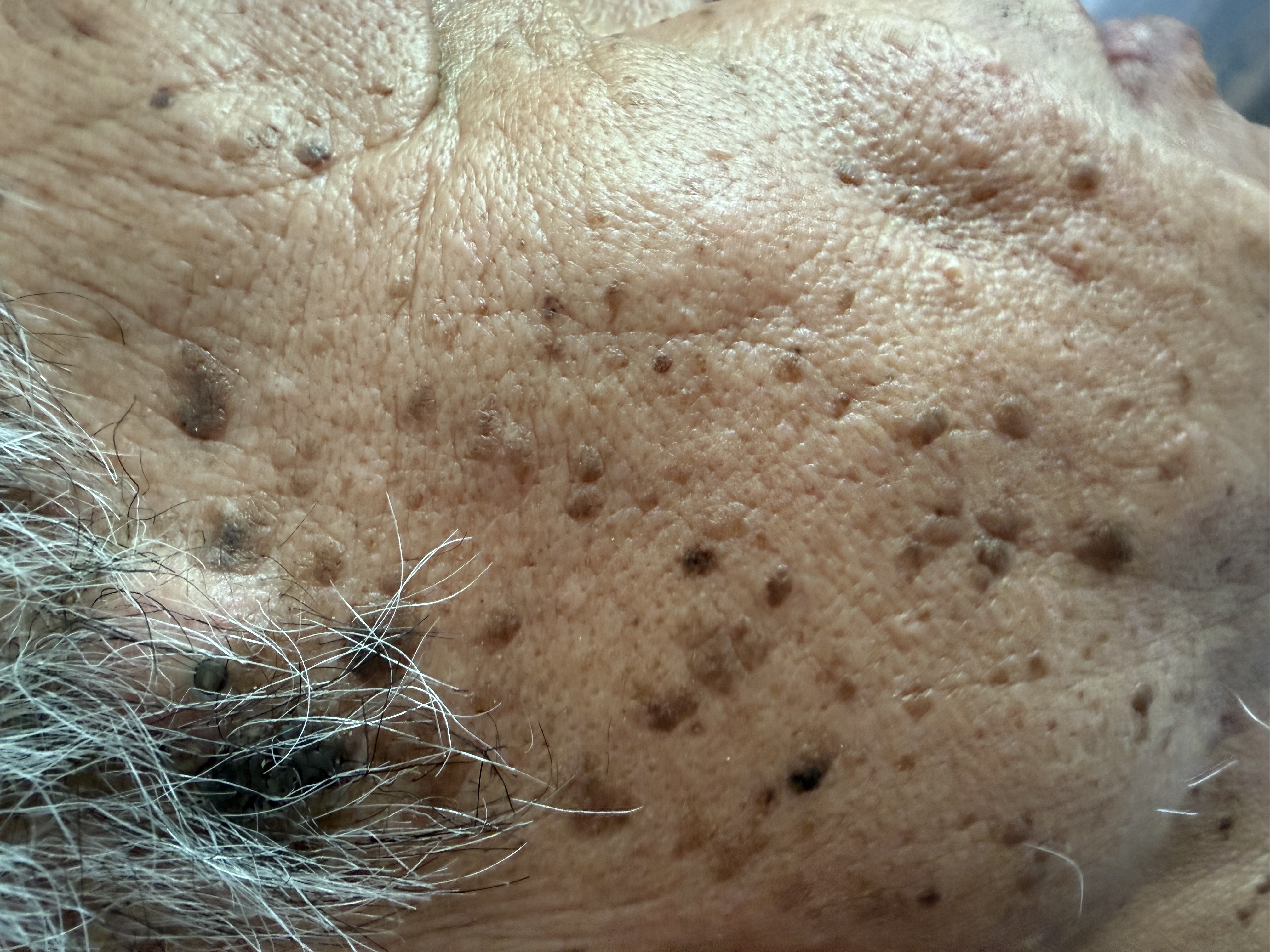
Typical features
How it often looks
- “Stuck-on” or waxy appearance
- Raised, rough, or wart-like surface
- Color from light tan to dark brown or black
- Round or oval shape with well-defined edges
- Can be small or grow over 1 inch in size
How it often feels
- Usually painless
- May feel rough, bumpy, or slightly scaly
- Can become irritated by clothing, shaving, or scratching
When to see a dermatologist
Although seborrheic keratoses are usually benign, it is important to have any new or changing skin growth evaluated, especially if you notice:
- Rapid change in size, shape, or color
- Bleeding, crusting, or persistent irritation
- Irregular or poorly defined borders
- Multiple colors within the same lesion
- Itching, pain, or tenderness
Common removal options
Removal is often done for cosmetic reasons or when the growth becomes irritated. A dermatologist will choose the method based on the lesion’s size, location, and appearance.
- Cryotherapy: Freezing with liquid nitrogen so the lesion crusts and falls off.
- Curettage: Gently scraping the lesion after numbing the skin.
- Electrocautery: Using controlled heat to destroy the growth.
- Shave removal: Shaving the raised portion and sometimes sending tissue for pathology.
- Laser treatment: Used in some cosmetic settings to target texture or pigment.
Any procedure can leave a mark or change in pigmentation. Discuss expected healing and scarring with your dermatologist before deciding on removal.
Causes & Risk Factors
Seborrheic keratosis is not caused by infection or poor hygiene. Instead, it develops due to natural changes in the skin.
Common contributing factors
- Age-related skin cell growth patterns
- Genetics (often runs in families)
- Sun exposure over many years
- Dry or irritated skin